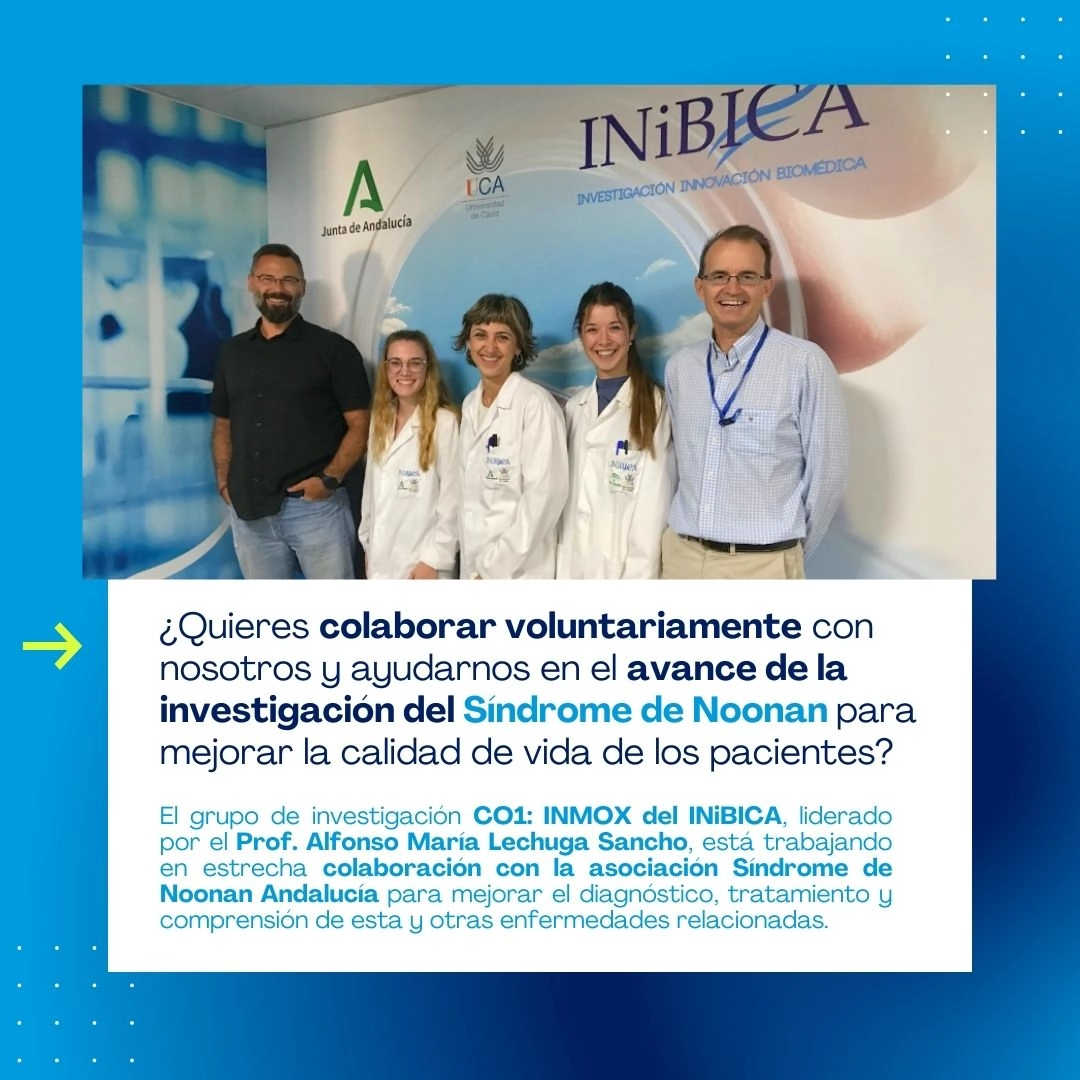


🧑🔬🔬 The INiBICA research group “ CO1: ” (INMOX ), led by Prof. Alfonso María Lechuga Sancho, is working in close collaboration with the Noonan Syndrome Association of Andalusia. 🤝 Together, they aim to improve the diagnosis, treatment, and understanding of Noonan syndrome and other related diseases.
👉 El síndrome de Noonan es una condición genética poco frecuente que afecta aproximadamente a 1 de cada 1000 personas. Se caracteriza por defectos cardíacos congénitos, baja estatura, retraso en el desarrollo y predisposición al cáncer, entre otros síntomas. Como en otras enfermedades poco frecuentes (llamadas «raras»), no todos los pacientes presentan todos estos síntomas, lo que hace que su estudio y diagnóstico sea complejo.
🔍 Thanks to advances in genetics, we can now explore many characteristics of our complete genetic code. However, the challenge lies in understanding how genetic variations affect each person’s development and their genetic disease or condition in different ways.
💉 To this end, the Team at CO1: INMOX uses a minimally invasive procedure: a small skin biopsy performed under local anesthesia, which is virtually painless. These biopsies provide skin cells that can be used for various tests. This allows us to better understand the disease, determine when a genetic variation leads to a specific condition, and evaluate how different medications and treatments might help improve these individuals’ lives. For this reason, we need the cooperation of patients who are willing to volunteer to help us advance our research.
🤝 This collaboration reflects a strong social and scientific commitment. Advancing our understanding of Noonan syndrome and improving patients’ lives is our priority. This process is crucial for improving diagnostic accuracy and developing personalized treatments that benefit each patient.
🔗 Más información: Instagram