


IN26: Cancer Research Group

IN26: Cancer Research Group
A group of physicians from various medical specialties at the University Hospitals of Puerto Real and Jerez de la Frontera, with an interest in cancer research. We also include medical interns and residents who carry out their clinical and research activities in line with each of the group’s research areas.
Responsible researcher
- José Juan Bosco López Sáez:
- E-mail: juanbosco.lopez@gm.uca.es
- ORCID: 0000-0002-4897-5283
Lines of research
- Line 1: MECHANISMS OF RESISTANCE TO ANTICANCER DRUGS. We have explored new aspects of the MDR1 system and investigated the expression of LRP and MRP in cell lines and biopsies to classify tumors. This line of research arose because a large part of the failure in cancer treatment stems from resistance to chemotherapy. The group has been building its DNA library for several years. In addition, for the past few years, a mathematical model of this problem has been under study in collaboration with the group “ PAIDI ” (FQM-201: Theory of Bifurcations and Dynamical Systems) at the UCA. The clinical work carried out by the group enables the design of studies and research with significant clinical applicability.
- Line 2: CARCINOGENESIS. Any “carcinogenic” phenomenon that damages genes in cells can cause cancer; however, for a cell to become cancerous (“cancerous transformation”), damage must occur in several cancer-causing genes within the same cell. In other words, the altered genes must be part of characteristic processes—or hallmarks—inherent to the very formation of cancer: cell proliferation, resistance to cell death and immortality, blood vessel formation, the ability to spread, energy reprogramming, and evasion of the immune system. Because each of these processes is extremely complex, involving a vast number of mediators that interact with one another, the same disease can arise through a wide variety of mutations. In reality, this great variation means that we are dealing with distinct diseases grouped under a single name. The significance of this diversity is becoming increasingly well understood. For example, the term “breast cancer” encompasses patients whose disease exhibits different combinations of molecular markers that require different treatments. It has already been noted that half of all tumors result from smoking, obesity, alcohol consumption, and a sedentary lifestyle—factors that are entirely preventable. There is a long list of factors known to increase the risk of developing cancer, but many patients who develop it have not been exposed to known carcinogens. The causes of cancer have been identified primarily through population-based studies of geographic cancer incidence and lifestyle habits, along with exposure studies in animals and cells. It has already been noted that it typically takes a long period of time to complete the stages of carcinogenesis, and it is common for decades to elapse between exposure to a carcinogen and the clinical onset of cancer. However, the effect of carcinogens will be greater and occur sooner when exposure to other carcinogens is added, and even more so when intrinsic risk factors are present, due to possible inherited mutations. The accumulation of genetic damage over the years causes the likelihood of developing cancer to increase dramatically with age. In fact, increased life expectancy and an aging population are the reasons behind the enormous rise in cancer incidence in society.
- Line 3: CARDIOVASCULAR PATHOPHYSIOLOGY. There are approximately 15.5 million cancer survivors. More than 40% of these patients will develop cardiovascular disease (CVD). This occurs, on the one hand, due to the advancing age of patients, who are at increased risk for CVD, and because some anticancer drugs, along with radiation therapy (RXT), can cause cardiac damage; however, we must also consider other emerging therapies, such as immunotherapy. Research is needed in the field of cardio-oncology to prevent the deterioration of cardiac and vascular function that could lead to reduced cancer survival. Our group focuses on biomarkers of cardiovascular damage, improving current and future treatments, and enhancing imaging methods. In summary, clinical-physiological research promotes the ongoing development of new diagnostic procedures that, when applied to the evaluation of these patients, will benefit them.
Keywords
- # Drug Resistance
- # Carcinogenesis
- # Cancer
- # Cardiotoxicity
- # Hepatocellular Carcinoma
- # Vascular Pathophysiology
IN26: Cancer Research Group
IN26: Cancer Research Group
Responsible researcher
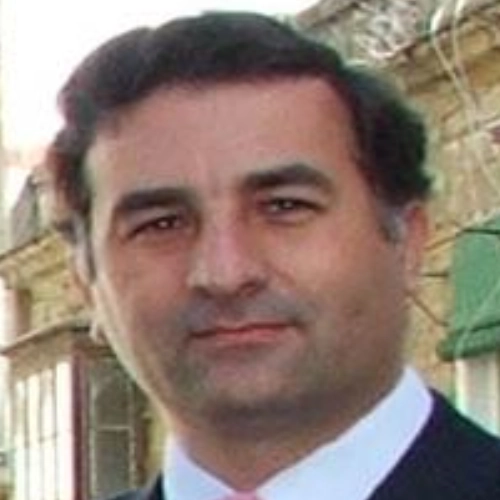
José Juan Bosco López Sáez:
Full Professor. Department of Medicine. University of Cádiz. FEA INTERNAL MEDICINE. UGC INTERNAL MEDICINE. University Hospital of Puerto Real.
- E-mail: juanbosco.lopez@gm.uca.es
- ORCID: 0000-0002-4897-5283
- Research ID: J-5449-2014
- Scopus ID: 55393549800
Members of the Team
- Principal Investigators:
- José Juan Bosco López Sáez (PI).
- Researchers:
- Alejandro Peinado Martínez.
- Francisco Téllez Pérez.
- Paula Pérez Rodríguez.
- José Luis Puerto Alonso.
- Beatriz Rosado Peña.
- Marta Millán Orgue.
IN26: Cancer Research Group
IN26: Cancer Research Group
Production
Find all of the group's publications ( Projects, Patents , and Publications) on the I+Salud Portal of the Andalusian Public Health System:
