

Cádiz ’s Institute for Biomedical Research and Innovation (INiBICA) held the “Research with a Future” conference this morning, an event aimed at early-career and early-postdoctoral researchers to introduce them to the HRS4R process and the European Charter for Researchers, with the goal of providing practical tools for research career planning, employability, mentoring, and scientific communication. This workshop was organized in collaboration with the University of Cádiz ’s various doctoral programs: Health Sciences, Biomolecules and Biomedicine, and Physical Activity and Sports Sciences.
The event took place in the auditorium of the School of Nursing and Physical Therapy at the University of Cádiz and was attended by more than 25 people, primarily researchers from R1 and R2, as part of one of the annual initiatives included in the FCÁDIZ/INiBICA HRS4R Action Plan.
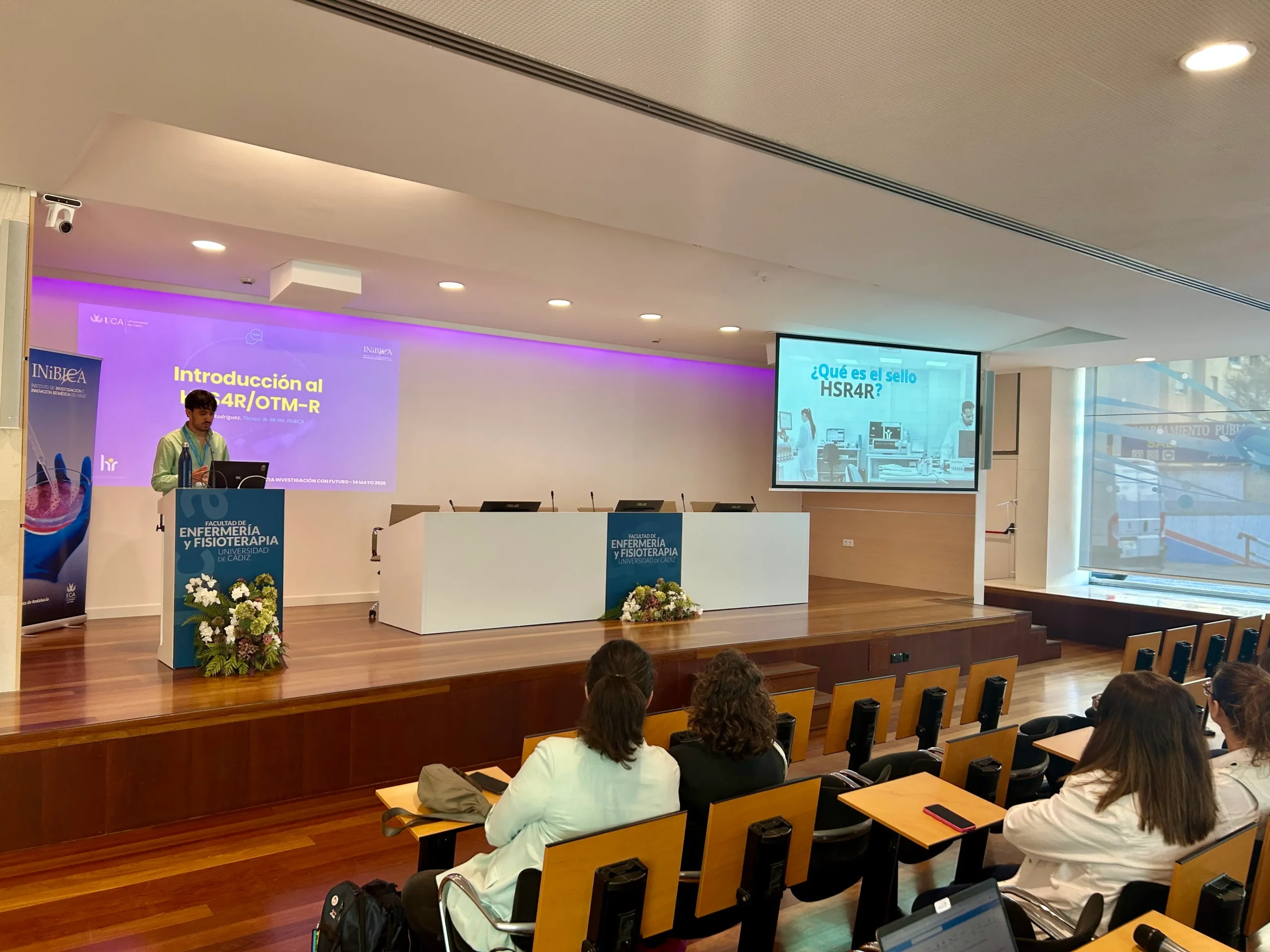
The session began with an institutional welcome address by Diana Regueiro Catalán, Head of Management at Projects at INiBICA. Next, Jorge Rodríguez García, a Human Resources specialist at INiBICA, presented an introduction to the HRS4R/OTM-R framework, addressing the importance of open, transparent, and merit-based hiring processes, as well as their relevance to the development of research careers.
One of the morning’s main segments was the panel discussion “Roles of Research Staff Beyond Academia,” moderated by Pedro Galeano Galea, a quality specialist at INiBICA. Participants in this panel included Gema Jiménez Gómez, from PALEX; Adela González Jiménez, from BIOGEN; Cirenia Arias Baldrich, an illustrator; and Itziar Peñafiel Andrés, from REGIC. During the session, the speakers briefly shared their academic and professional backgrounds, offering a practical perspective on the diversity of career paths that can open up as a result of scientific training. The panel discussion explored career opportunities both within and outside the academic sphere, with a special focus on the transfer of skills, professional diversification, and opportunities in sectors related to health, biomedicine, industry, management, and scientific communication. They also raised questions regarding the value of skills acquired during the research phase, the importance of networking and collaboration in professional Networks , as well as the role of mentoring and role models in professional career development both within and outside academia.
The event continued with a presentation by employers, featuring Ginés Nieto García from EUROFINS and Cristina López Saratxaga from TECNALIA. This segment brought research staff into closer contact with organizations in the professional and business sectors, helping them understand the types of profiles in demand, the skills that are valued, and possible pathways for entering the job market.
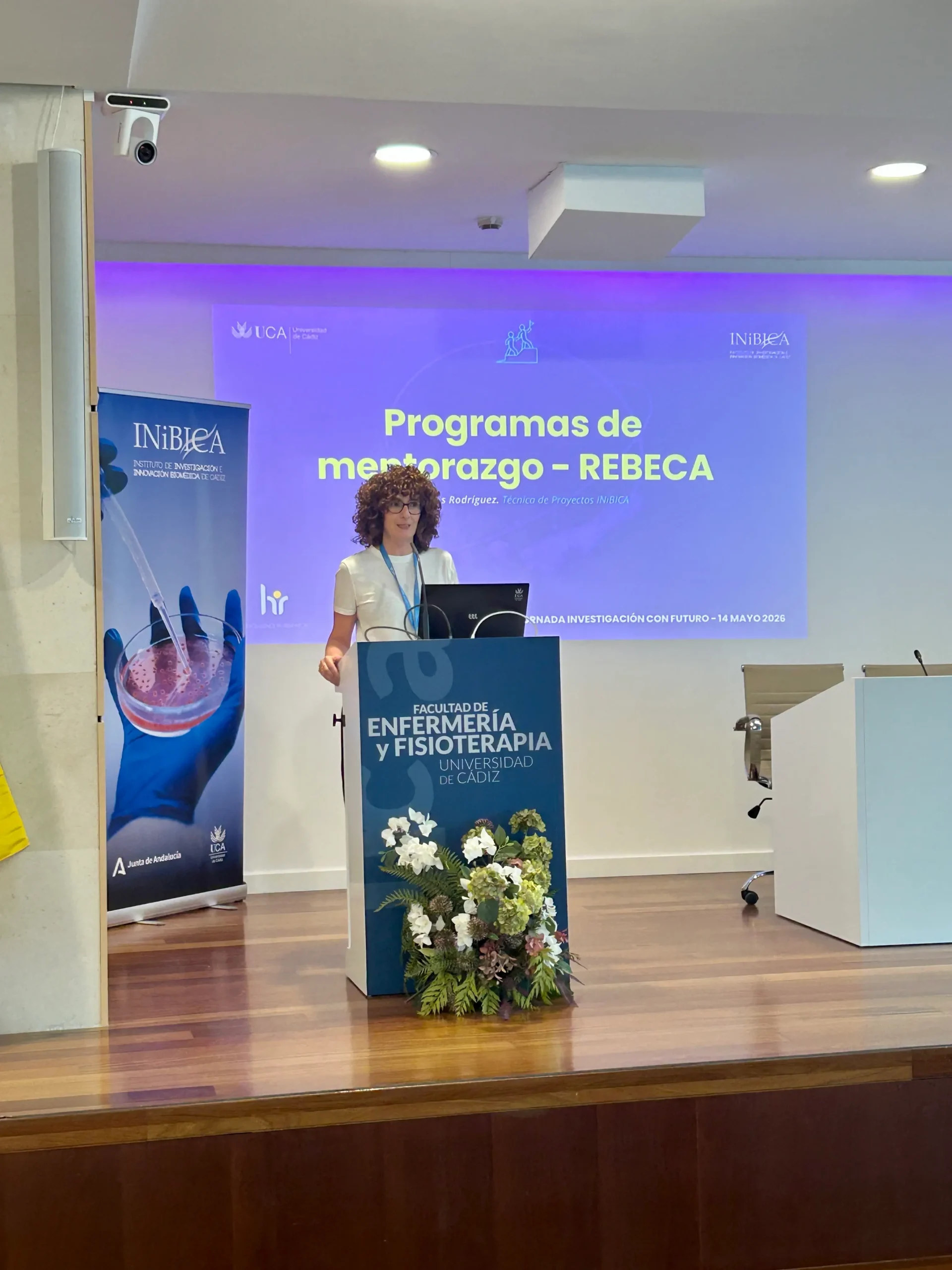
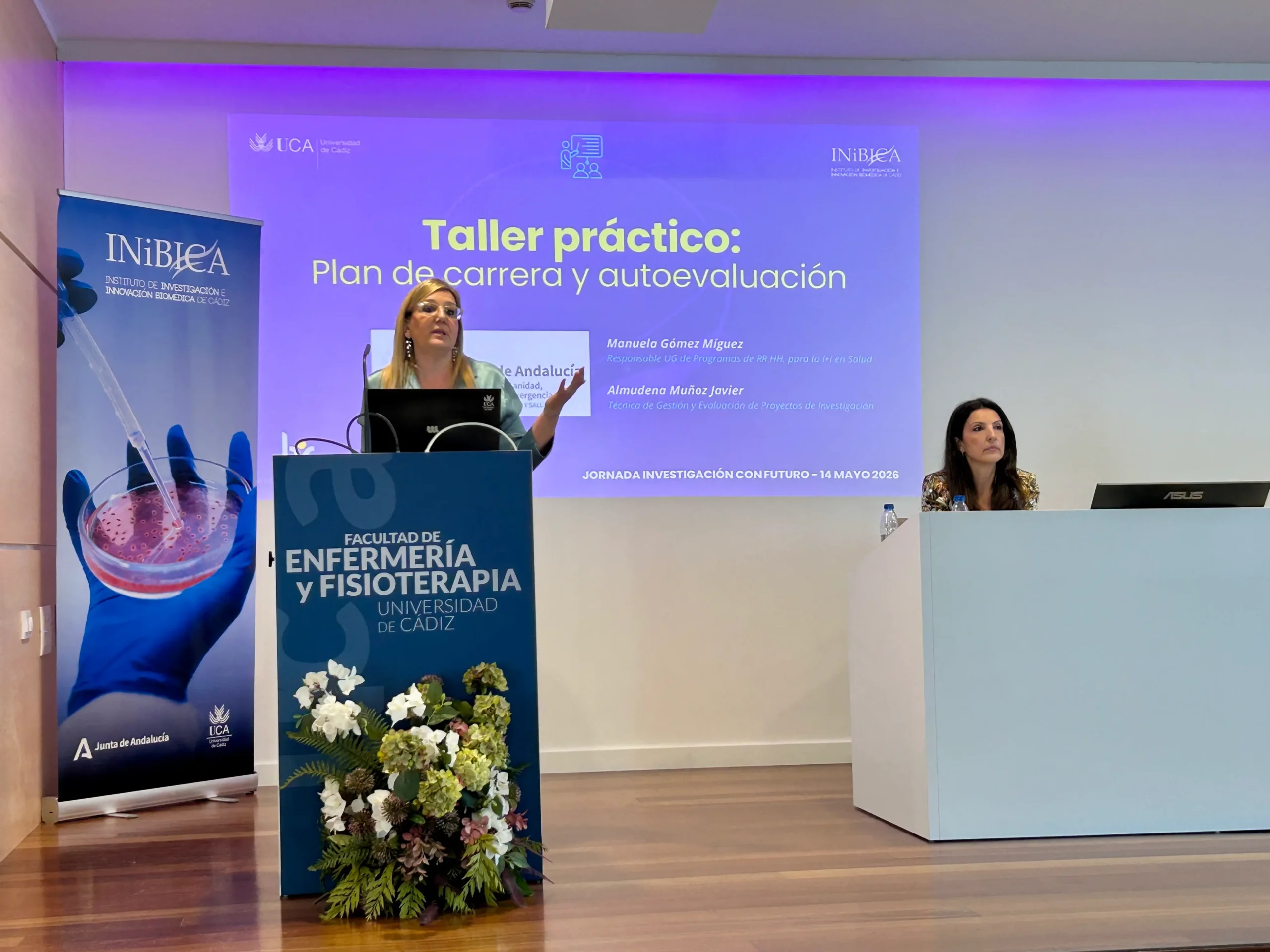
After a coffee break and networking session, the event featured a presentation on the REBECA mentoring programs by Lourdes Rodríguez Blázquez, a specialist at INiBICA’s “ Projects .” This was followed by the hands-on workshop “Career Planning and Self-Assessment,” led by Manuela Gómez Míguez and Almudena Muñoz Javier of the Andalusian Public Foundation for Progress and Health. This workshop allowed participants to reflect on their career paths, identify strengths and areas for improvement, and explore useful tools for making professional decisions.
The final training module was devoted to communication training for researchers addressing non-scientific audiences, led by Cirenia Arias Baldrich (Cirenia Sketches). The session addressed the importance of adapting scientific language for non-specialist audiences—a key skill for improving outreach, the social transfer of knowledge, and the visibility of biomedical research.