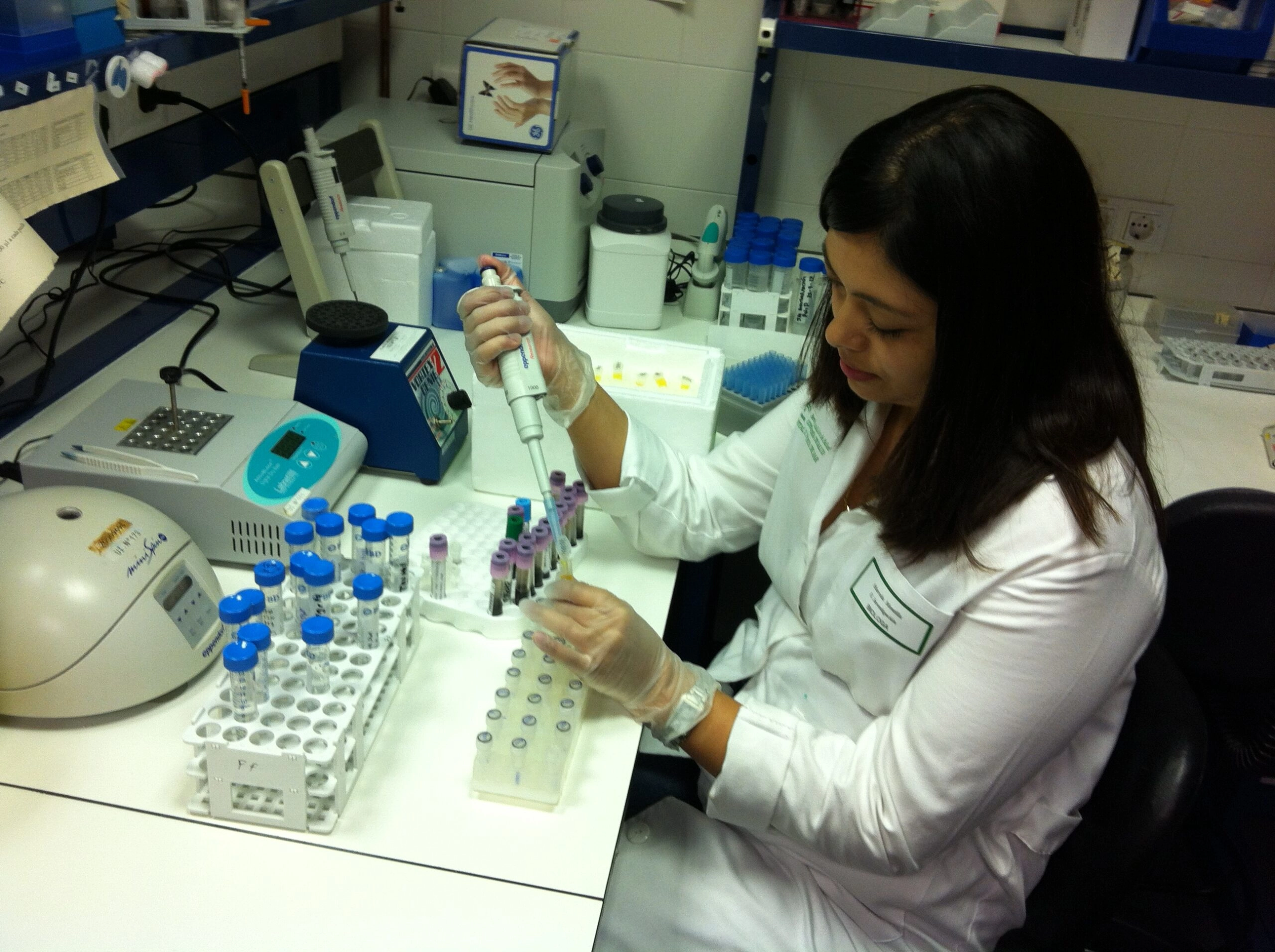


The results of a study published in the *International Journal of Molecular Sciences* suggest a potential new compound for treating hemophilia A in patients for whom Factor VIII infusions cannot be used
The main complication in the treatment of hemophilia A is that many patients develop autoantibodies against the injected Factor VIII, which eventually renders the treatment ineffective. Therefore, it is urgent to study the mechanisms of coagulation that will enable us to find new treatments for these patients.
In this regard, researchers from the University of Cádiz (UCA) and Puerta del Mar Hospital (HUPM), affiliated with the Institute for Biomedical Research and Innovation at Cádiz (INiBICA), in collaboration with researchers from the Virgen del Rocío Hospital (HUVR) in Seville, have recently reported that phosphate polymers (polyphosphates) could form the basis for the design of new therapies to treat hemophilia A.
In previous studies, researchers had found that a blood factor called von Willebrand factor (vWF) can be modulated by phosphate polymers (polyphosphates) that occur naturally in the body.
In this study, it was determined that the modulation of FvW by polyphosphates occurs only in the absence of another blood factor, known as Factor VIII. Factor VIII is, in fact, the factor that is lacking in patients with hemophilia A.
Authors conducted experiments on plasma samples from healthy individuals, patients with hemophilia A of varying severity, and patients with different types of von Willebrand disease. They also studied molecular interactions in vitro, where they found that polyphosphate and FVIII compete to bind to FvW. These findings were published this week in the *International Journal of Molecular Sciences*.
Según los resultados obtenidos, los autores sugieren que el polifosfato – que es un coagulante natural – podría utilizarse en el diseño de nuevas terapias para tratar la hemofilia A que sustituyan al FVIII, cuando éste último no pudiera usarse, como en aquellos pacientes que han generado auto-anticuerpos.
This work was carried out by the “Phosphate Metabolism” research group at UCA/HUPM/INiBICA, in close collaboration with faculty members from the Department of Biomedicine, Biotechnology, and Public Health (UCA) and the Department of Hematology at HUVR. The researchers involved were Marcela Montilla (HUPM, now a professor at the Cooperativa University of Colombia), Isabel Atienza-Navarro (HUPM/UCA), Francisco José García-Cozar (UCA), Carmen Castro (UCA), and Francisco Javier Rodríguez-Martorell (HUVR), led by Professor Félix A. Ruiz (Nutrition Division, UCA).
Bibliographic Citation: Montilla, M.; Atienza-Navarro, I.; García-Cozar, F.J.; Castro, C.; Rodríguez-Martorell, F.J.; Ruiz, F.A. Polyphosphate Activates the Interaction of von Willebrand Factor with Glycoprotein Ib in the Absence of Factor VIII In Vitro. Int. J. Mol. Sci. 2022, 23, 14118. https://doi.org/10.3390/ijms232214118.
🔗 More information: Polyphosphate Activates the Interaction Between von Willebrand Factor and Glycoprotein Ib in the Absence of Factor VIII In Vitro