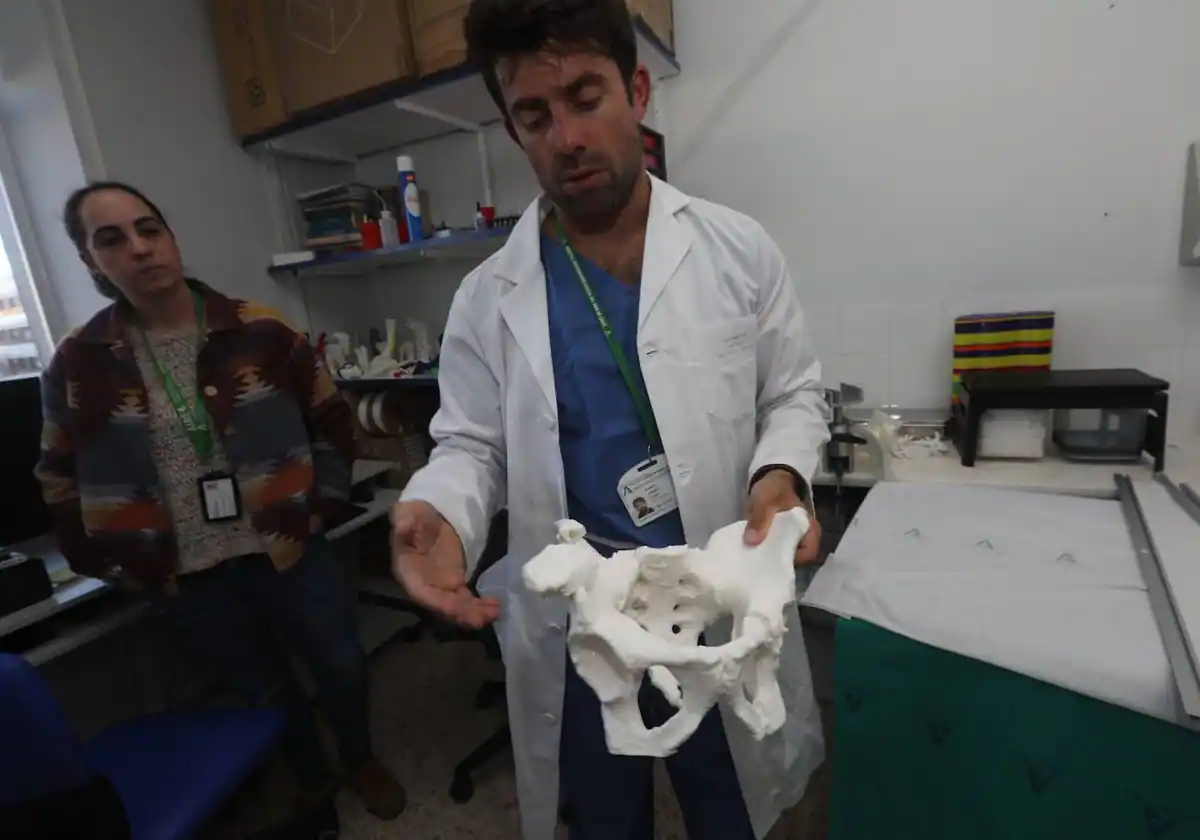


El hospital gaditano cuenta con un laboratorio en el que se producen réplicas exactas de órganos o fracturas óseas
Esta impresión de material biomédico permite a los sanitarios analizar mejor los casos clínicos, especialmente las cirugías, que afrontan con mayor seguridad gracias a estas económicas reproducciones
Los avances tecnológicos se abren camino en diversos ámbitos que influyen en nuestro día a día y en el sector sanitario no iba a suceder menos. En Cádiz, el Hospital Universitario Puerta del Mar ofrece una buena muestra de ello gracias a la impresión 3D.
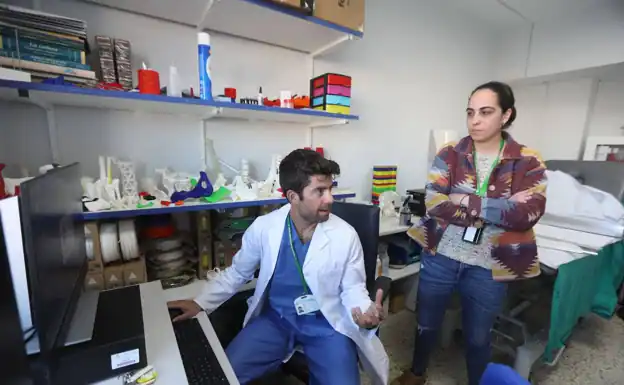
En un laboratorio situado de forma estratégica en el corazón del centro hospitalario, en la zona central de la quinta planta, seis máquinas van creando capa por capa elementos que son de gran ayuda para muchos pacientes, aunque ellos lo desconozcan.
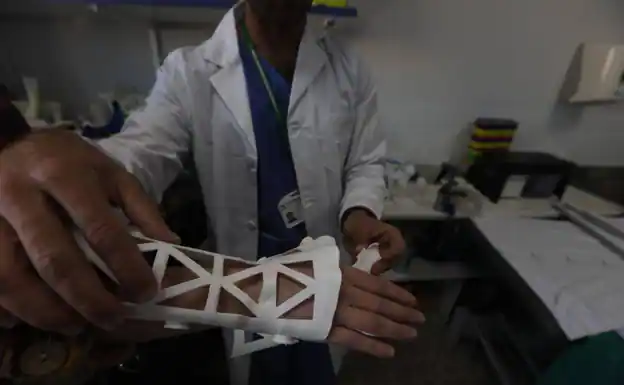
Gracias a esta tecnología, este hospital de referencia logra crear réplicas exactas de partes del cuerpo humano, hechas a medida a partir de pruebas de diagnóstico como el TAC o la resonancia magnética, que sirven a los profesionales médicos para planificar las intervenciones quirúrgicas con un nivel de detalle mucho más preciso, lo que ofrece, entre otras cosas, un alto grado de seguridad en las operaciones y también una mayor rapidez a la hora de llevarlas a cabo, por lo que se pueden aliviar las listas de espera.
El doctor Pablo Andrés Cano, especialista en cirugía ortopédica y traumatología, es el responsable de un servicio que ha venido para quedarse y que tiene como objetivo aportar herramientas que faciliten el trabajo a los médicos y optimicen los resultados de los pacientes. «Es una fábrica dentro del hospital», afirma mientras enseña la sala.
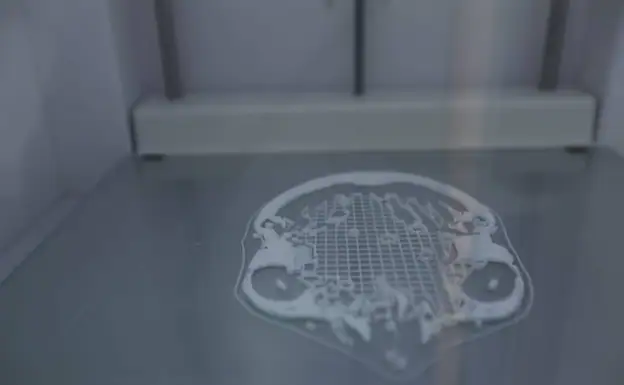
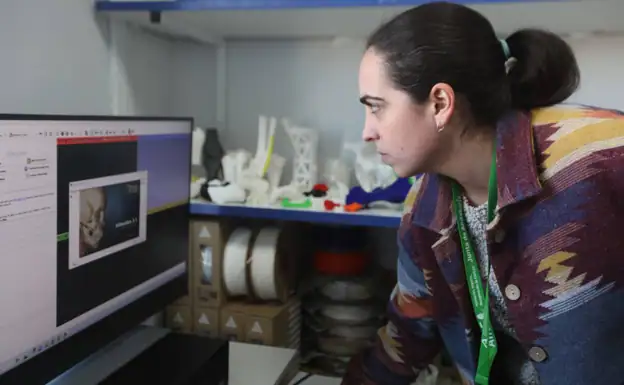
Para que este proyecto técnico, iniciado en 2017 y que adquiere mayor relevancia y oficialidad al crearse la Comisión Hospitalaria de Planificación Quirúrgica e Impresión 3D, es imprescindible la colaboración entre el personal médico y bioingenieros, que son quienes dan forma a través del software a los diseños. Este paradigma, para el que no hay marcha atrás y que irá evolucionando a pasos agigantados conforme pasen los años, implica la integración de ingenieros en los hospitales.
En el laboratorio gaditano, entre otros profesionales, se encuentra la ingeniera Laura Galán, que ni por asomo imaginó trabajar en un centro hospitalario mientras estudiaba la carrera: «Aquí es donde he aprendido todo porque yo de medicina no tenía ni idea. Y lo que seguiré aprendiendo», afirma.
Esta simbiosis que redunda en la calidad sanitaria es posible gracias a la participación del Instituto de Investigación e Innovación Biomédica de Cádiz, INiBICA, en diferentes proyectos y colaboraciones con universidades y empresas de todo el mundo. En el caso concreto de Laura, su contratación se produce a través del programa Investigo de la Junta de Andalucía, financiado con fondos europeos.
Lo primero que se tiende a pensar cuando se ven las máquinas de impresión 3D es en prótesis e implantes, pero de momento eso tendrá que esperar, explica el médico: «Existe un reglamento europeo que se publica en 2017, y un Real Decreto de 2023, que regula los productos sanitarios a medida. Tienen diferentes niveles de seguridad, no es lo mismo los biomodelos que utilizamos nosotros que un implante que sí se va a quedar dentro del paciente».
«Eso requiere de mayor seguridad y se hace en la sala blanca de una fábrica. El hospital podría tenerlo pero igual ahora no es rentable y se utilizan empresas», indica Andrés. «¿Qué estamos intentando hacer nosotros? Pues que todo ese proceso, a excepción del implante, se haga aquí en el hospital», agrega.
En el laboratorio crean guías quirúrgicas que son de enorme utilidad para los cirujanos a la hora de operar. «Las guías a medida marcan diferentes zonas del hueso que hay que operar y nos marcan dónde está la lesión, que a ojo sería muy difícil», explica el cirujano.
Las ‘copias’ de los huesos lesionados que imprimen permiten a los traumatólogos ‘ensayar’ y planificar las intervenciones que tendrán que llevar a cabo posteriormente con los pacientes, lo que se traduce en mayor seguridad, previsión y menor tiempo de ejecución: «Es una ventaja mientras se prepara el preoperatorio». «Se mejoran los resultados porque vas más preparado y por tanto es mejor para el sector sanitario porque hay más garantías y condiciones más seguras para el paciente», dice el doctor. «A la cirugía hay que ir a cumplir un plan establecido, no se va a improvisar», añade con rotundidad.
Y saca pecho cuando hace una valoración general del servicio: «Tenemos que estar orgullosos de la sanidad universal que tenemos, del nivel científico y de la calidad de los profesionales que trabajan en la sanidad pública y esta línea de investigación es un valor añadido muy importante».
«Los cirujanos de Cádiz o de España no tienen nada que envidiarle a los de Estados Unidos, Alemania o China. Lo que pasa es que a lo mejor ellos tienen un ingeniero más cerca. Pero eso ahora está cambiando», asegura.
Ingenieros en el hospital:
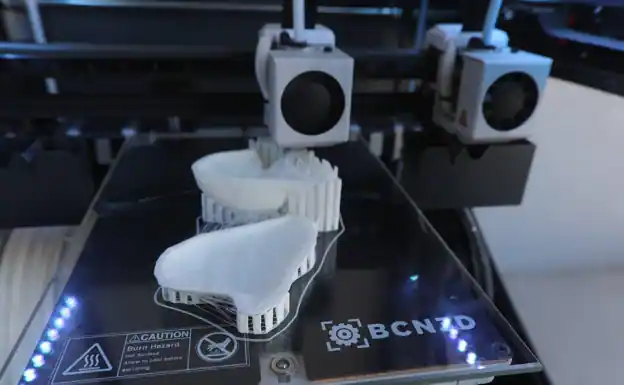
«Esto es una artería», señala Laura mostrando una de las máquinas de impresión. Algunos de estos materiales, hechas con distintos tipos de plástico, tienen como destino las facultades de Medicina y Enfermería, donde se pueden estudiar las características con todo lujo de detalle.
Y es que precisamente esta inserción en la medicina, ofrece a los ingenieros una nueva rama en la que poder especializarse y trabajar. «Nosotros en la carrera no vimos ninguna aplicación médica», cuenta la ingeniera, que se muestra satisfecha con la labor que está realizando en el Puerta del Mar y los conocimientos que va adquiriendo.
El doctor Andrés explica que ya han pasado por este servicio más de 30 ingenieros y estudiantes que han ido formándose en la materia y de los que, en sentido inverso, también aprenden los profesionales sanitarios determinadas cuestiones técnicas: «Han venido de toda España y también de países como Chile, Bélgica, Venezuela o Inglaterra».
«¿Qué supone que un bioingeniero te trate? Pues que tu cirugía y tu problema de salud se va a tratar con una perspectiva más multidisciplinar, por un profesional que aporta un valor a la operación como es el ingeniero, que tiene una serie de competencias que no tenemos los médicos, los enfermeros o los auxiliares», expresa el doctor. «Pasamos de un modelo clásico a otro totalmente personalizado».
Democratización en la cirugía:
Las máquinas, que son semiprofesionales, están haciendo copias durante todo el día si es preciso. En función del grado de complejidad, como una pelvis fracturada, el proceso puede alargarse durante más de dos días. Si la pieza es simple, no lleva más de unos minutos.
Las largas horas en quirófano y las situaciones a las que se enfrentan los cirujanos, a veces hacen que afloren ideas en sus cabezas sobre productos que serían útiles pero que no existen en el mercado. Ahora son realizables, cuando antes no pasaban de un mero dibujo en un papel tras la operación: «Muchas veces se nos ocurren soluciones que difícilmente llegaban a materializarse y con esta tecnología es tan fácil como subir a la quinta planta, se traducen y con los ingenieros adquieren forma».
De hecho, ya ostentan alguna que otra patente. Pero lo más enriquecedor en este sentido es que son muchos los colegas a lo largo de todo el mundo que, una vez que se les enciende la bombilla, si ven que puede resultar de ayuda en otros hospitales, lo suben a internet y los médicos no tienen más que descargarse el archivo y proceder a imprimir en los laboratorios con los ingenieros.
Un futuro prometedor:
Pablo Andrés Cano cree que en un futuro no muy lejano el propio sistema sanitario se podrá encargar de fabricar las prótesis, lo que, entre otras cosas, reduciría las esperas y abarataría tremendamente los costes: «La tendencia va encaminada a que existan fábricas o centros de fabricación de productos sanitarios que estén a disposición del sistema».
«Quizás no es rentable que cada hospital tenga una fábrica para hacerlo, pero tal vez el Sistema Andaluz de Salud, que es la mayor empresa sanitaria de España, puede tener un centro que se dedique a ello y desde ahí se distribuyan», explica.
Una de las funciones que tiene la Comisión Hospitalaria de Planificación Quirúrgica e Impresión 3D es asesorar sobre la importancia que tienen estas iniciativas a nivel económico porque se podrían optimizar otros procesos. El traumatólogo pone un ejemplo: «Producir una guía quirúrgica evita ir a la industria, y a lo mejor por dos euros se hace algo que una empresa cobra a 300, un coste ínfimo en comparación».
Formación continua:
Al tratarse de una tecnología en constante evolución, los profesionales tienen la necesidad de estar continuamente aprendiendo de una formación que muchas veces se queda obsoleta con prontitud porque los avances van más rápidos que el propio aprendizaje.
«Esto requiere estar muy actualizado porque la tecnología va cambiando. Es una revolución como en su momento fue el TAC o la resonancia. Lo bueno es que cuando pasen 25 años, tendremos la satisfacción de haber contribuido a ello desde un laboratorio en Cádiz», expresa el galeno.
Y aprovecha para agradecer a dos veteranos colegas como Pedro Cano y José Antonio Andrés, anteriores jefes de servicio del Virgen del Rocío y el Puerta del Mar respectivamente: «Ellos han visto de todo, tienen mucha experiencia y sin embargo desde el principio apoyaron esta tecnología, lo cual ha sido muy importante para que este laboratorio sea una realidad».
🔗 More information: La Voz Digital || Instagram