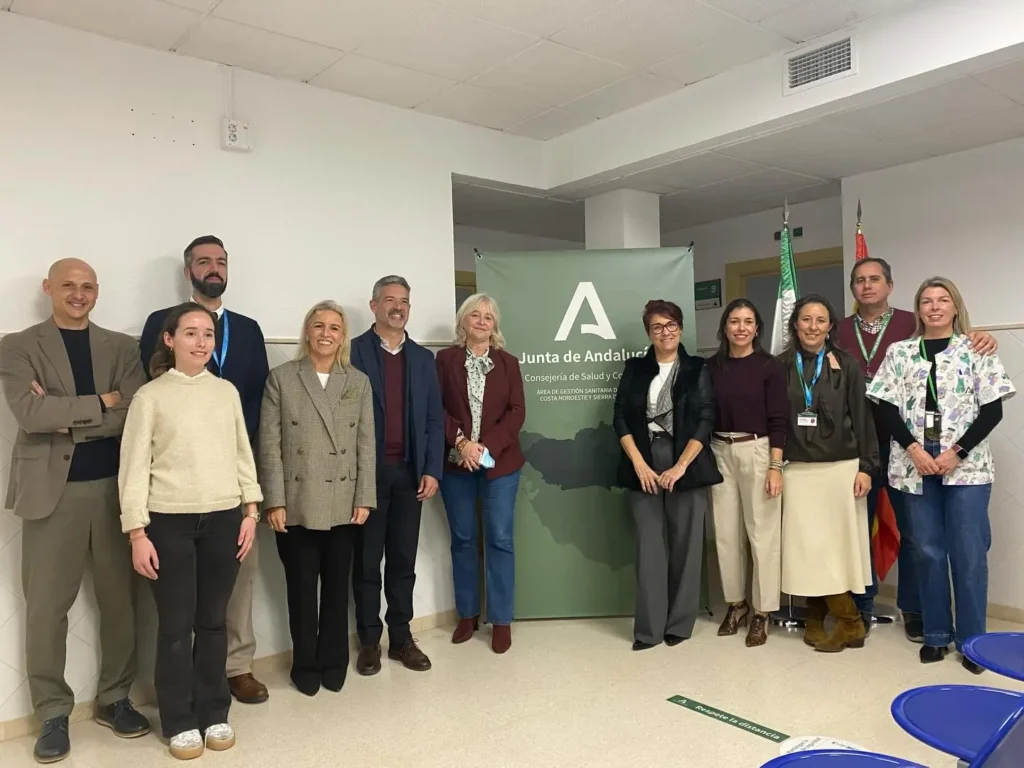
Three professors from the Institute for Biomedical Research and Innovation at Cádiz discuss the scientific and technology transfer focus of this joint initiative between the UCA and the Regional Government of Andalusia 🔬 Professors José Castro Piñero, Mónica García Alloza , and José Antonio Girón recently opened the doors of the Institute for Biomedical Research and Innovation at Cádiz (INiBICA) to share how their scientific work directly impacts society and how the institution has established itself as a driving force in biomedical research. 👩🔬 Careers That Transform Science: 🧠 José Castro Piñero, a professor of Physical Education and Sports, recalls that his research journey began in college, inspired by a professor who taught him to critically analyze scientific literature, and was solidified by a pivotal stint at UCLA that reinforced his motivation to generate knowledge. 🧬 Mónica García Alloza, professor of Physiology, explains that her interest in the biomedical sciences—and in particular in the brain and Alzheimer’s disease—arose thanks to the support of two professors during her training, which led her to work in research even before completing her studies and to spend time at institutions such as Harvard. 🧪 José Antonio Girón, a professor of medicine, notes that he has always been motivated to understand the mechanisms of disease and healing, and that his research is a way to contribute his own knowledge to medicine. 📈 Projects with an impact on the public: 👦 Castro Piñero highlights the development of the ALPHA Battery, a scientific tool for assessing health-related physical fitness in children and adolescents, which has been adopted by schools across Europe and is widely used in research. He is currently working on the ADULTFIT Battery for the adult population. 💡 García Alloza emphasizes that, although his basic research does not always have immediate clinical applications, his work on the relationship between type 2 diabetes and Alzheimer’s disease may be relevant to millions of people given the significant impact of both diseases on public health. 🧑⚕️ Girón highlights collaborative research on HIV and hepatitis C coinfections, which has generated clinically applicable knowledge, such as the use of noninvasive techniques and an understanding of chronic complications in HIV patients. 🤝 An environment that fosters talent and knowledge transfer: 🏛️ For Castro Piñero, the environment at INiBICA and the University of Cádiz has been essential for developing innovativ Projects s thanks to infrastructure, resources, and support for scientific management. 📊 García Alloza acknowledges the current challenges in research within the university, particularly due to the teaching workload, but is confident that INiBICA’s recent accreditation will attract talent and resources that will further strengthen local biomedical research. 🧠 For Girón, the close collaboration between the university and the healthcare system has been key to transforming clinical questions into research- Projects s with real-world applications, reinforcing INiBICA’s role as a bridge between basic science and clinical practice. 🔗 More information: UCA